
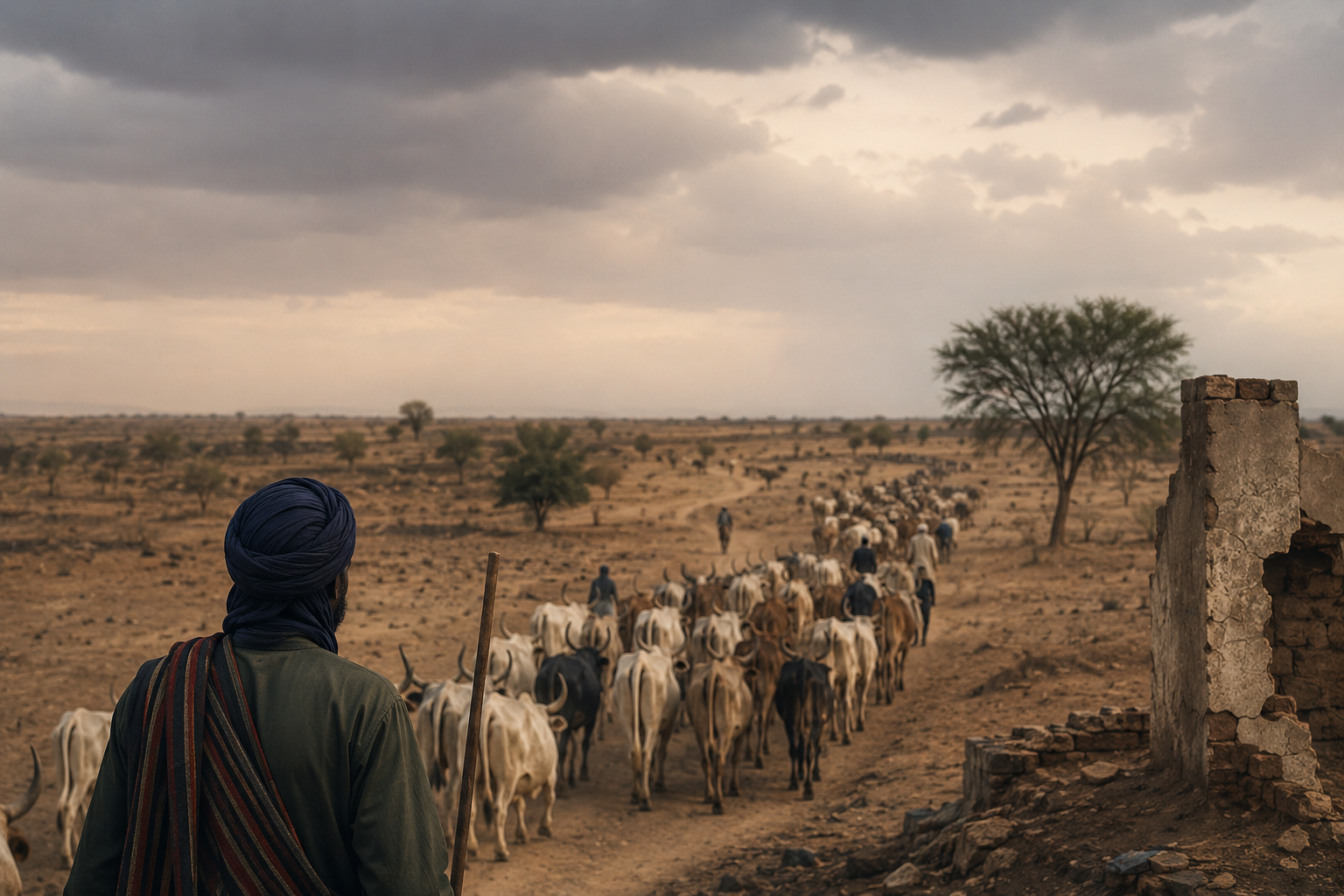
For centuries, the movement of pastoralists and their livestock across the West African Sahel, known as transhumance, has been a cornerstone of survival, a living legend etched into the sands of the Sahel and Saharan landscape. These ancient migration patterns, driven by the search for water and pasture, are deeply intertwined with the region's contemporary security crises. Data from the Mansir's Tables Hub reveals how disruptions to these traditional lifeways, fueled by an interplay of environmental pressures and escalating insecurity, are contributing to widespread conflict.
The very routes that once facilitated life are now often blocked or fraught with danger. An analysis of Pastoralism and Transhumance Patterns shows that "Jihadist insecurity," "blocked/cultivated cattle routes," "loss of grazing reserves," "Boko Haram blocking northeast routes," and "anti-open grazing laws" are significant barriers to traditional movements. These challenges are not isolated as they manifest as tangible "Friction points" in Cross-Border Transhumance Bilateral Networks. Here, factors like "Water scarcity," tensions arising "when pastoralists arrive before crops harvested," and "widespread insecurity in Nigeria reducing Niger pastoralists' willingness to cross" illustrate the direct impact on traditional routes.
Across Burkina Faso and Niger, the Conflict Events and Violence Incidents dataset records a total of 13 unique conflict events and violence incidents between 1990 and 2011. While the dataset does not specify causal links, the nature of many reported events often points to resource competition or identity-based tensions, which are exacerbated when traditional access to land and water is constrained.
Furthermore, the human cost of this escalating instability is undeniable. In Niger and Nigeria, the Named Conflict Incidents with Specific Fatalities dataset documents a cumulative total of 1,027 reported fatalities across just nine specific incidents between 1990 and 2016. These incidents highlight the severe human toll when historical land-use patterns clash with modern land pressures, climate change impacts, and the proliferation of armed actors.
In regions like North-West Nigeria, areas encompassing Zamfara, Kaduna, and Katsina experienced significant conflict intensity between 2012 and 2017, as detailed in the Nigeria Conflict Geography by Region. The main actors involved in these conflicts often include "bandits," "pastoralist groups," and "farming communities," connecting the direct link between livelihood strategies, resource competition, and violence. The table data also shows the genesis of the crisis in the region.
The overall narrative that emerges is one where the legendary paths of transhumance, once symbols of resilience and adaptation, have become flashpoints for conflict. The convergence of climate change reducing available resources, agricultural expansion encroaching on grazing lands, and the pervasive presence of armed groups and insecurity has fundamentally altered the viability of traditional pastoralism. The data cannot establish direct causation for every conflict, but it powerfully illustrates a strong correlation between the disruption of historical ecological practices and the escalation of violence in the Sahel. Understanding these deep-seated connections is crucial for devising sustainable solutions that address both human security and environmental consciousness in the region.
Referenced Tables
-
Pastoralism and Transhumance Patterns (Pastoralism and Security West Africa Sahel) 6 rows · Pastoralism and Security West Africa Sahel
-
Cross-Border Transhumance Bilateral Corridors (Pastoralism and Security West Africa Sahel) 8 rows · Pastoralism and Security West Africa Sahel
-
Conflict Events and Violence Incidents (Pastoralism and Security West Africa Sahel) 13 rows · Pastoralism and Security West Africa Sahel
-
Named Conflict Incidents with Specific Fatalities (Pastoralism and Security West Africa Sahel) 9 rows · Pastoralism and Security West Africa Sahel
-
Nigeria Conflict Geography by Region (Pastoralism and Security West Africa Sahel) 11 rows · Pastoralism and Security West Africa Sahel
-
State Responses to Farmer-Herder Conflicts (Pastoralism and Security West Africa Sahel) 17 rows · Pastoralism and Security West Africa Sahel
-
Impact of Armed Conflict on Archaeological Sites (Geoarchaeology of Western Sahara) 9 rows · Geoarchaeology of Western Sahara
-
Conflict Prevention and Resolution Mechanisms (Pastoralism and Security West Africa Sahel) 24 rows · Pastoralism and Security West Africa Sahel
-
Nigeria Boko Haram Impact on Pastoralism (Pastoralism and Security West Africa Sahel) 9 rows · Pastoralism and Security West Africa Sahel
-
Analytical Propositions and Cross-Cutting Findings (Pastoralism and Security West Africa Sahel) 13 rows · Pastoralism and Security West Africa Sahel